




Menopause is a natural transition, but for many women, it comes with 40+ symptoms affecting the mind, body, and skin. From hot flashes to anxiety and hair thinning, the experience can feel overwhelming. This is why many women explore holistic support systems, often including structured herbal routines like the Menoveda Products combo, which combines multiple Ayurvedic formulations to address emotional, physical, and dermal changes together, rather than in isolation.
This guide covers a complete menopause symptoms list and explains how Ayurveda and targeted herbal formulations can help manage each category effectively.
What Happens During Menopause?
Menopause occurs when estrogen and progesterone levels decline. According to Ayurveda, this stage is dominated by Vata imbalance, leading to dryness, irregularity, and instability in the body.
Instead of suppressing symptoms, Ayurveda focuses on:
- Restoring internal balance
- Supporting hormones naturally
- Addressing root causes, not just surface symptoms
Complete Menopause Symptoms List (40+ Signs)
Let’s break this into three main categories for clarity:
1. Emotional & Cognitive Symptoms
These symptoms are often the most distressing and are linked to hormonal fluctuations affecting the nervous system.
Common Signs:
- Anxiety(Ayurvedic medicine for anxiety)
- Mood swings
- Depression
- Brain fog (supplement for brain fog)
- Memory issues
- Lack of concentration
- Irritability
- Panic attacks
- Low confidence
- Sleep disturbances/insomnia
- Lack of motivation
These symptoms are widely reported in menopause and can deeply affect daily life
Ayurvedic Solution:
- Adaptogenic herbs like Ashwagandha, Brahmi, and Shatavari help calm the nervous system as part of ayurvedic treatment for menopause
- Support emotional balance and sleep cycles
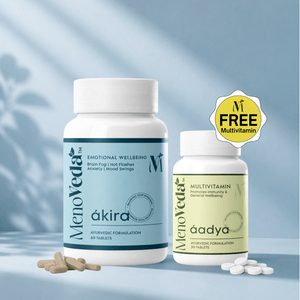
- Promote mental clarityIn Menoveda’s approach, formulations like Akira are designed to support emotional wellbeing, helping manage stress, hot flashes, and sleep issues together
2. Physical & Internal Health Symptoms
Hormonal decline impacts metabolism, digestion, bones, and energy levels.
Common Signs:
- Fatigue
- Weight gain
- Bloating
- Joint pain
- Muscle loss
- Low energy
- Digestive issues
- Nausea
- Poor metabolism
- Bone density loss
- Breast soreness
- Body odor changes
These physical symptoms often overlap and worsen without proper support
Ayurvedic Solution:
- Metabolism-supporting herbs like Guggul and Moringa
- Strength-building herbs like Shatavari
- Digestive support with natural detox herbs
Menoveda’s Amaya formulation focuses on energy, metabolism, joint health, and weight balance using Ayurvedic herbs like Ashwagandha and Moringa

3. Skin, Hair & Intimate Health Symptoms
Declining estrogen directly affects skin elasticity, hydration, and hair growth.
Common Signs:
- Hair thinning or hair fall in menopause
- Acne or skin changes
- Dry skin
- Itchy skin
- Vaginal dryness
- Nail brittleness
- Loss of glow
- Pigmentation
- Burning mouth syndrome
- Vulvovaginal discomfort
These symptoms reflect internal dryness and tissue depletion, a key concept in Ayurveda
Ayurvedic Solution:
- Rejuvenating herbs like Amla, Neem, and Guduchi
- Improve collagen, hydration, and tissue repair
- Support feminine health naturally
Menoveda’s Asaya formulation focuses on skin, hair, and intimate health restoration using antioxidant-rich Ayurvedic ingredients

Why One Symptom = One Solution Doesn’t Work
Many women try to treat symptoms individually, sleep for insomnia, creams for skin, and supplements for bones.
But menopause is systemic.
Menoveda’s approach combines:
- Emotional support
- Physical strength
- Skin and hormonal balance
This multi-formulation system targets root causes instead of isolated symptoms
Ayurvedic Root-Cause Approach to Menopause
Ayurveda sees menopause as a transition, not a disorder.
Key Principles:
- Balance Vata dosha
- Nourish tissues (Dhatus)
- Support natural hormone rhythms
- Relief stress and inflammation
Menoveda follows this philosophy with:
- Plant-based, hormone-free formulations
- Adaptogenic herbs for stress
- Phytoestrogen-rich herbs for hormonal balance
How to Manage Severe Menopause Symptoms Naturally
Here’s a simple Ayurvedic routine:
Daily Habits:
- Warm, nourishing foods
- Regular sleep schedule
- Gentle exercise (yoga, walking)
Herbal Support:
- Ashwagandha → stress & sleep
- Shatavari → hormonal balance
- Amla → skin & immunity
Structured Supplement Approach:
Using targeted combinations (like Menoveda’s system) helps address:
- Multiple symptoms at once
- Long-term balance instead of quick fixes
Final Thoughts
Menopause is not just about a few symptoms, it’s a full-body transition with 40+ signs that require a comprehensive approach.
Instead of treating each symptom separately, a holistic Ayurvedic system can help restore balance across emotional, physical, and dermal health.
That’s where Menoveda stands out.
With:
- Dedicated formulations like Akira (emotional health), Amaya (physical health), and Asaya (skin & hair)
- Plant-based, hormone-free ingredients
- Root-cause healing approach
Menoveda offers a structured way to navigate menopause naturally and confidently
Explore the full range and find the right combination for your symptoms.
Because menopause isn’t the end of vitality, it’s the beginning of a balanced, stronger phase of life.
Frequently Asked Questions
Q1. How do I know if my symptoms are due to menopause?
If you are 40+ and experiencing irregular periods along with symptoms like hot flashes, mood swings, or fatigue, it may indicate perimenopause or menopause.
Q2. How can Ayurveda help with menopause symptoms?
Ayurveda focuses on balancing hormones naturally, reducing stress, and improving overall health through herbs, diet, and lifestyle changes.
Q3. Can menopause symptoms last for years?
Yes, symptoms can last several years depending on hormonal changes and lifestyle factors.
Q4. Can Ayurvedic supplements be taken daily?
Most Ayurvedic formulations are designed for regular use, but consistency over a few months is key for noticeable results.
Q5. Is weight gain common during menopause?
Yes, slower metabolism and hormonal changes often lead to weight gain and bloating.
Q6. Is hair loss reversible during menopause?
With proper nutrition, hormonal balance, and herbal support, hair health can improve over time.
Q7. Will menopause affect mental health?
Yes, hormonal fluctuations can lead to anxiety, mood swings, and even depression in some cases.
Q8. What are the most common menopause symptoms?
The most common include hot flashes, night sweats, mood swings, fatigue, weight gain, and sleep disturbances.
Q9. Why do menopause symptoms feel so intense?
Because multiple systems, hormonal, nervous, metabolic, and skin, are affected simultaneously.


