




Hair fall during menopause is one of the most emotionally challenging symptoms women experience. You may notice sudden hair thinning, excessive shedding, or a visible reduction in volume. While many think it’s just aging, the real cause lies deeper, inside the body.
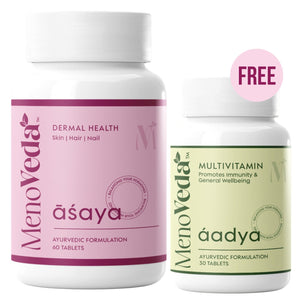
Ayurvedic menopause care focuses on correcting this internal imbalance. For example, formulations like Asaya by Menoveda are designed with herbs such as Neem, Shatavari, Amla, and Guduchi, traditionally used to support skin and hair health during menopausal transition. Rather than acting as a quick cosmetic fix, such blends aim to nourish from within, which is essential when dealing with hair fall in menopause. You can also explore supplements for women and supplements to balance hormones for broader hormonal support.
Why Does Hair Fall Happen During Menopause?
Hair fall in menopause is mainly caused by hormonal changes, especially the drop in estrogen levels.
1. Decline in Estrogen Levels
Estrogen plays a key role in keeping hair in the growth phase. When it drops:
- Hair grows slower
- Hair becomes thinner
- Hair falls out more easily
2. Increase in Androgens
As estrogen decreases, male hormones (androgens) become more dominant. This can:
- Shrink hair follicles
- Lead to thinning at the crown
- Cause pattern-like hair loss
3. Poor Nutrient Absorption
Menopause often affects digestion and metabolism, which means:
- Less absorption of iron, calcium, and vitamins
- Weak hair roots
- Increased hair breakage
4. Stress and Sleep Issues
Menopause is often linked with:
- Anxiety
- Insomnia
- Emotional stress
These factors can trigger telogen effluvium, a condition where hair enters the shedding phase early.
Signs of Hair Fall in Menopause
You may be experiencing menopausal hair fall if you notice:
- Excess hair on pillow or comb
- Thinning ponytail
- Visible scalp in parting
- Dry, brittle strands
- Slow hair regrowth
Unlike seasonal hair fall, this type is persistent and progressive, which is why early action is important.
The Ayurvedic View: What’s Really Happening?
In Ayurveda, hair fall in menopause is linked to an imbalance in Pitta and Vata doshas.
- Pitta imbalance → Heat in the body, leading to hair thinning and premature greying
- Vata imbalance → Dryness, weak roots, and brittle hair
Menopause is considered a Vata-dominant phase, which naturally increases dryness and degeneration in the body.
Root Cause (Ayurveda Perspective):
- Weak Rasa dhatu (nutritional fluid)
- Imbalance in Asthi dhatu (bone tissue, linked to hair health)
- Toxin buildup (Ama)
This is why external treatments alone don’t work. You need internal nourishment.
The Ayurvedic Fix for Menopausal Hair Fall
1. Balance Hormones Naturally
Herbs like:
- Shatavari – supports female hormonal balance
- Ashwagandha – reduces stress and cortisol
- Guduchi – improves immunity and detox
These herbs help address the root hormonal imbalance rather than masking symptoms. You can also explore ayurvedic medicine for irregular periods and ayurvedic medicine for pcos for related hormonal concerns.
2. Strengthen Hair from Within
Hair health depends on internal nutrition. Ayurvedic ingredients like:
- Amla – rich in antioxidants, supports hair growth
- Neem – purifies blood and improves scalp health
- Guggul – supports metabolism and detox
These are commonly used in menopause-focused formulations to support dermal and hair health.

3. Reduce Internal Heat and Inflammation
Menopause increases body heat (Pitta), which damages hair follicles.
Cooling herbs like:
Haldi (Turmeric)
Babul helps calm inflammation and protect hair roots.
4. Improve Nutrient Absorption
Ayurveda focuses on improving digestion (Agni), because:
- Better digestion = better nutrient delivery to hair roots
- Stronger roots = less hair fall
5. Manage Stress Holistically
Chronic stress is one of the biggest triggers of hair fall in menopause.
Daily practices:
- Meditation
- Oil massage (Abhyanga)
- Herbal support
can significantly reduce hair shedding over time.
Lifestyle Tips to Control Hair Fall During Menopause
Along with Ayurvedic support, small daily habits can make a big difference:
Eat Hair-Friendly Foods
- Leafy greens (iron)
- Nuts & seeds (healthy fats)
- Fresh fruits (antioxidants)
Avoid Excess Heat
- Limit spicy, fried foods
- Reduce caffeine
Gentle Hair Care
- Avoid harsh shampoos
- Limit heat styling
- Use herbal oils
Sleep Well
Aim for 7–8 hours of quality sleep to regulate hormones.
Why External Treatments Alone Don’t Work
Most women try:
- Hair oils
- Serums
- Shampoos
But these only work on the surface.
Menopausal hair fall is an internal issue, caused by:
- Hormonal imbalance
- Nutrient deficiency
- Stress
Without addressing these, results remain temporary.
How Menoveda Supports Menopausal Hair Health
Menoveda focuses on Ayurvedic menopause care, offering formulations designed specifically for this life stage.
Products like Asaya are created with:
- Multiple Ayurvedic herbs (Neem, Shatavari, Amla, Guduchi)
- Focus on dermal health (skin, hair, nails)
- Support for menopausal symptoms including hair thinning
Instead of isolated solutions, this approach targets:
- Hormonal balance
- Internal nourishment
- Long-term wellness
Final Thoughts
Hair fall in menopause is not just a cosmetic issue, it’s a sign that your body is going through deep internal changes. Ignoring it or treating it only externally will not bring lasting results.
The real solution lies in:
- Balancing hormones
- Nourishing the body
- Managing stress
A Holistic Step Towards Healthier Hair
If you’re struggling with persistent hair fall in menopause along with other symptoms like dryness, fatigue, or skin changes, it may be time to look at a more complete solution. You can also learn more about related hormonal conditions through pcod vs pcos, pcos symptoms and treatment, and how to cure pcos permanently.
Menoveda’s Ayurvedic approach focuses on root-cause healing, not surface-level fixes. Their formulations, like Asaya, are thoughtfully designed using traditional herbs to support dermal health and internal balance during menopause.
Explore Menoveda’s menopause care range and take a step towards restoring your hair health, naturally and holistically.
Disclaimer: This content is for informational purposes only and is not a substitute for professional medical advice. Always consult your healthcare provider.
Frequently Asked Questions
Q1. How can I stop hair fall during menopause naturally?
Focus on hormone balance, stress management, and nutrient-rich foods. Ayurvedic herbs like Shatavari and Amla can support internal healing.
Q2. How long does menopausal hair fall last?
It varies. For some, it lasts a few months; for others, it continues longer without proper care.
Q3. Can hair grow back after menopause hair loss?
Yes, if the root cause is addressed early. Supporting hormones and nutrition improves regrowth.
Q4. Can stress during menopause cause hair fall?
Yes. Stress increases cortisol, which pushes hair into the shedding phase.
Q5. Is hair fall in menopause permanent?
Not always. Early intervention and proper care can reverse or reduce it significantly.
Q6. Will taking supplements help with hair fall in menopause?
Supplements that support hormonal balance and nutrition may help, especially when combined with lifestyle changes.
Q7. What is the best Ayurvedic herb for menopausal hair fall?
Shatavari is considered one of the best for hormonal balance, while Amla supports hair strength.
Q8. Why does hair become thin during menopause?
Because estrogen levels drop, and androgen activity increases, weakening hair follicles.


