




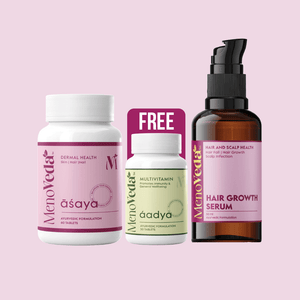
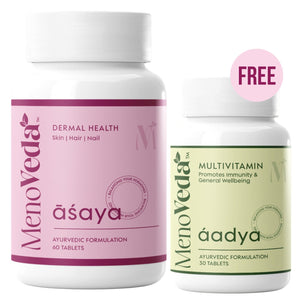
Menopause can feel overwhelming, especially when your hair starts changing. You may notice more strands on your pillow, a wider parting, or a thinner ponytail. While looking for support, many women explore Ayurvedic solutions like the Menoveda Hair Revival Kit, which typically combines herbal formulations and scalp care rooted in natural healing. But before choosing a remedy, it’s important to understand what you’re dealing with: is it hair thinning menopause, or actual hair loss?
These two conditions may seem similar, but they are different, and knowing the difference can help you choose the right solution. You can also explore supplements for women and supplements to balance hormones for broader hormonal support.
Understanding Hair Changes During Menopause
Menopause usually happens between the ages of 45 and 55 and brings a drop in estrogen and progesterone. These hormones play a key role in keeping hair thick and healthy. When they decline, androgen (male hormone) levels increase, affecting hair growth cycles.
This hormonal imbalance can:
- Shrink hair follicles
- Slow hair growth
- Increase hair shedding
- Make hair finer and weaker
This is why hair thinning menopause is one of the most common symptoms women experience.
What is Hair Thinning?
Hair thinning is a gradual process where your hair becomes less dense over time.
Key Signs of Hair Thinning:
- Your ponytail feels smaller
- The scalp becomes slightly visible
- Hair strands become finer
- Overall volume reduces
In hair thinning, you still have hair growing, but each strand becomes weaker and thinner.
Why It Happens:
- Reduced estrogen slows hair growth
- Hair follicles shrink
- Nutrient absorption declines
- Scalp health weakens
Hair thinning is often the early stage of menopausal hair issues.
What is Hair Loss?
Hair loss is more severe. It means you are losing hair faster than your body can replace it.
Key Signs of Hair Loss:
- Noticeable hair shedding (clumps)
- Bald patches or visible scalp
- Hairline recession
- Sudden excessive fall while washing or combing
Hair loss during menopause is often linked to androgenic alopecia, where hair follicles stop producing new hair.
Why It Happens:
- Increased sensitivity to DHT (a hormone)
- Hormonal imbalance
- Stress and lifestyle factors
- Nutritional deficiencies
Hair Thinning vs Hair Loss: Key Differences
Factor | Hair Thinning | Hair Loss |
Severity | Mild to moderate | Moderate to severe |
Hair Growth | Slower but continues | Stops or reduces significantly |
Appearance | Reduced volume | Bald spots or patches |
Hair Fall | Normal to slightly increased | Excessive shedding |
Reversibility | Easier to manage | Requires deeper treatment |
Why Hair Problems Worsen During Menopause
Hair issues during menopause are not just about hormones. Multiple factors contribute:
- Hormonal Imbalance: Lower estrogen + higher androgens = weaker hair follicles.
- Poor Scalp Health: Dandruff, dryness, or infections can block hair growth.
- Nutritional Deficiency: Low iron, protein, and vitamins reduce hair strength.
- Stress & Sleep Issues: Menopause often brings anxiety and poor sleep, which directly impacts hair health.
- Reduced Blood Circulation: Less oxygen and nutrients reach hair roots.
Ayurvedic View on Hair Thinning Menopause
Ayurveda sees hair fall as a result of an imbalance in Pitta and Vata doshas. During menopause:
- Pitta imbalance leads to hair fall
- Vata imbalance causes dryness and thinning
Instead of only treating symptoms, Ayurveda focuses on root cause correction.
Menoveda products follow this philosophy by combining:
- Herbal extracts
- Scalp-nourishing oils
- Hormonal balance support
For example, their formulations often include herbs like:
- Ashwagandha (stress support)
- Hibiscus (strengthens roots)
- Onion & curry leaves (improve circulation)
These ingredients help improve scalp health and support hair density naturally. You can also explore ayurvedic medicine for irregular periods and ayurvedic medicine for pcos for related hormonal concerns.
How to Identify Your Condition Correctly
Ask yourself these questions:
- Is your hair becoming thinner but still growing? → Hair Thinning
- Are you losing large amounts of hair daily? → Hair Loss
- Is your scalp becoming visible in patches? → Hair Loss
- Is your hair just losing volume overall? → Hair Thinning
Correct identification is key to choosing the right treatment.
How to Manage Hair Thinning and Hair Loss
1. Improve Scalp Health
Healthy scalp = healthy hair growth. Use natural oils and herbal formulations.
2. Support Hormonal Balance
Since menopause is hormone-driven, internal balance is essential.
3. Use Ayurvedic Hair Care
Herbal solutions work on:
- Root strengthening
- Scalp nourishment
- Circulation improvement
4. Eat a Hair-Friendly Diet
Include:
- Protein (lentils, eggs)
- Iron (spinach)
- Omega-3 (nuts, seeds)
5. Reduce Stress
Yoga, meditation, and sleep support are essential.
When Should You Take Action?
- Hair fall lasts more than 3 months
- Visible scalp patches appear
- Hair texture becomes extremely weak
- Sudden heavy shedding starts
Early action can prevent permanent damage.
Final Thoughts
Hair thinning and hair loss during menopause may look similar, but they require different approaches. While thinning is gradual and manageable, hair loss needs deeper intervention.
The key is to act early, treat the root cause, and choose holistic solutions instead of quick fixes.
Restore Your Hair Confidence with Menoveda
Menopause doesn’t have to mean losing your confidence. Menoveda focuses on root-cause healing through Ayurveda, offering plant-based, hormone-free formulations designed for women in this phase.
If you're dealing with severe hair thinning menopause, or ongoing hair fall, the Hair Revival Kit is designed as a complete approach, combining scalp care, herbal nourishment, and internal balance support.
Instead of masking symptoms, it works with your body to:
- Support hormonal balance
- Nourish the scalp
- Strengthen hair from root to tip
Explore Menoveda and take the first step toward healthier, fuller hair, naturally. You can also learn more through pcod vs pcos, pcos symptoms and treatment, and how to cure pcos permanently.
Disclaimer: This content is for informational purposes only and is not a substitute for professional medical advice. Always consult your healthcare provider.
Frequently Asked Questions
Q1. How can I tell if I have hair thinning or hair loss?
Hair thinning reduces volume gradually, while hair loss causes excessive shedding and visible bald spots.
Q2. How can menopause affect hair growth?
Hormonal decline slows hair growth and increases sensitivity to DHT, weakening hair follicles.
Q3. Can hair thinning during menopause be reversed?
Yes, with proper nutrition, scalp care, and hormonal support, thinning can be improved.
Q4. Is hair loss during menopause permanent?
Not always. Early treatment can slow or even reverse it, depending on the cause.
Q5. Will my hair grow back after menopause?
It depends on follicle health. If follicles are active, regrowth is possible with the right care.
Q6. What is the main cause of hair thinning in menopause?
Hormonal imbalance, especially reduced estrogen and increased androgens.
Q7. Why does hair fall increase suddenly during menopause?
Hormonal shifts, stress, and nutrient deficiencies combine to accelerate hair shedding.
Q8. Why is scalp care important during menopause?
A healthy scalp improves blood circulation and supports stronger hair growth.


